
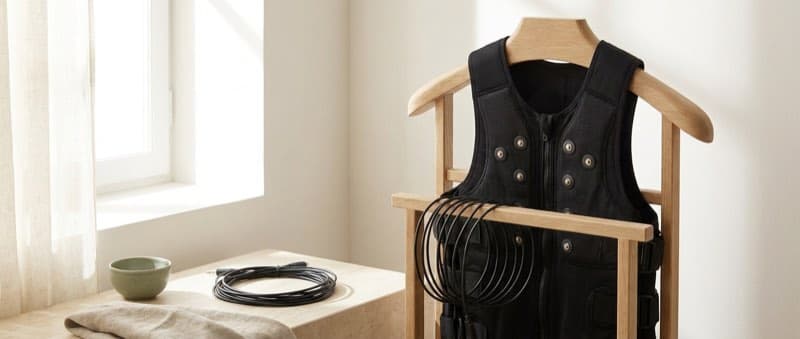
WB-EMS (Whole-Body Electrical Muscle Stimulation)
Availability In clinic or at home
What it is
A tight-fitting suit wired with electrodes that sends electrical pulses into major muscle groups, arms, chest, back, glutes, thighs, at the same time you move through a short bodyweight or light-resistance workout. The stimulation adds load on top of whatever the exercise itself is already doing.
Why people use it
The appeal is time: a 20-minute session claims to deliver what a much longer conventional workout would, which draws people short on time or unable to tolerate high-impact training. Studios market it hard to busy professionals and older adults looking for a lower-strain way to build strength.
How it's delivered
Sessions run about 20 minutes, once or twice a week, in a suit connected to a console a trainer controls, or through a home suit paired with an app. Trainers or automated protocols set intensity per muscle group and raise it as tolerance builds.
Where the evidence stands
The randomized-trial base is genuinely stronger here than for most of this category. Meta-analyses in non-athletic and older adults show consistent, meaningful gains in muscle strength and lean mass compared with no training, including in frail older people who tolerated a supervised pilot program well. Fat-mass changes are smaller and less consistent. The real risk is dosing: pushing WB-EMS at high intensity, especially early or unsupervised, has caused rhabdomyolysis, and none of the strength data has been shown to translate into a longer life.
Estimated cost
- $40–$60 per 20-minute studio session
- $150–$250/mo for weekly-session memberships
- $1,800–$2,500 for a home EMS suit
- Not covered by insurance
Who offers it
Not yet matched to specific provider menus in our research pass; WB-EMS studios, including chains like miha bodytec and BODY20, operate in most major US cities. We may be compensated when you contact providers through Longevity.io; payment never affects ranking.
Go deeper
No recovery-modalities guide covers WB-EMS yet. The science of aging hub is the closest read on where time-efficient strength tools sit in the wider research picture.
Longevity.io is for educational purposes only and is not medical advice. Starting intensity too high is the documented risk here, which makes a supervised first session and a clinician's clearance worth having if you have kidney or muscle disease. Confirm supervision and intensity settings directly with any provider.
Build your starting plan.
A few short questions, about two minutes. The Blueprint recommends where to start and explains why.
Build my Blueprint