
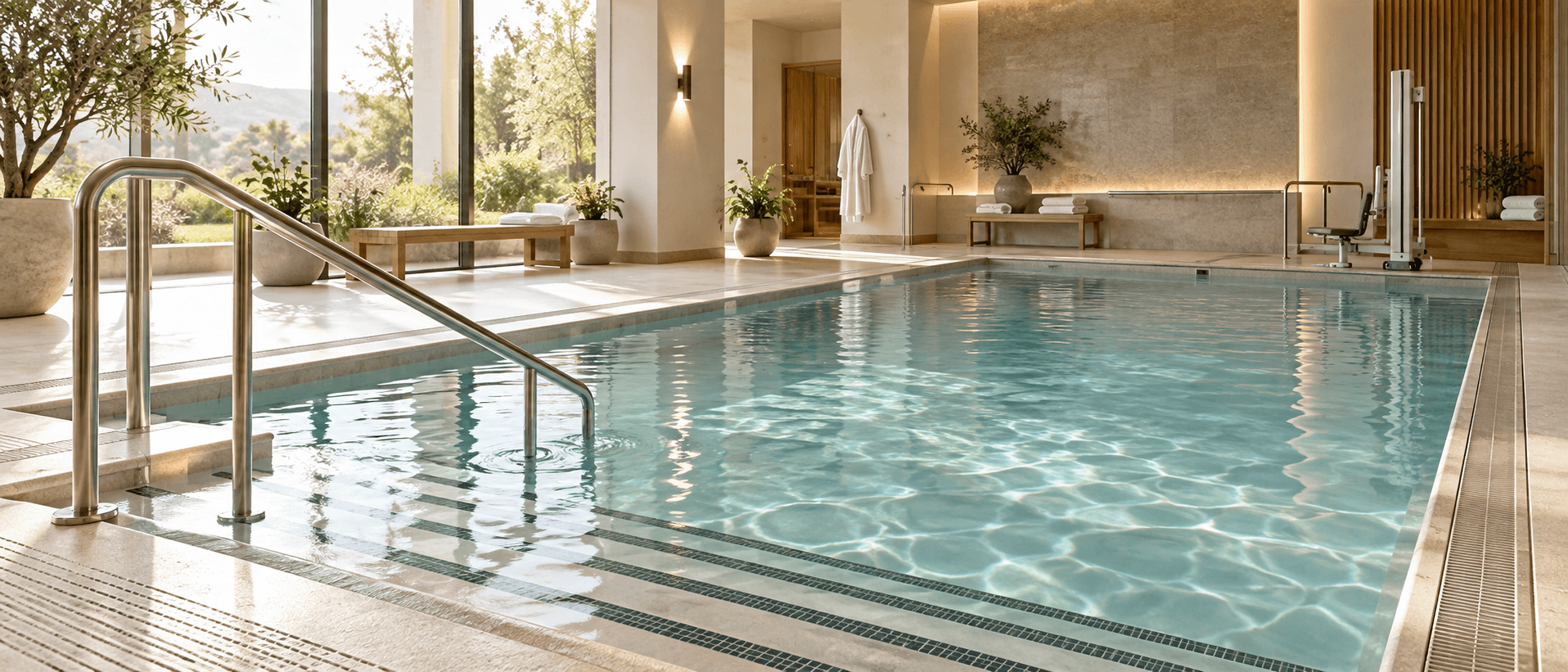
Warm-water hydrotherapy
Warm immersion offers a bathing break, while its early vascular research concerns carefully controlled heat exposure.
Label covers Vascular-marker research under repeated controlled immersion
Availability In clinic or at home
What it is
Warm-water hydrotherapy involves immersion in a heated bath or hot tub, sometimes with water jets. Passive soaking differs from aquatic rehabilitation, where a practitioner guides exercises in water to address a specific movement or functional problem.
Why people use it
People seek warmth, comfort and a break from physical tension. These wellspan aims concern everyday experience. Research also examines vascular changes relevant to healthspan, but those questions require different evidence from whether a soak feels pleasant.
How it's delivered
You sit or recline in warm water at home or in a spa. Jets add moving pressure, while steps and handrails affect access. A comfortable seat and an exit you can manage independently are practical considerations when deciding whether a particular tub suits your space. Safe operation requires maintained disinfectant levels, filters and clean surfaces; warm water can harbour harmful germs.1
Where the evidence stands
Evidence for cardiovascular-marker improvements is Emerging (vascular markers only). A small controlled study found better blood-vessel function after repeated hot-water immersion, but it measured markers rather than heart attacks or survival.2 Its intensive research protocol doesn't establish that occasional soaking prevents disease. Aquatic-exercise findings also can't establish the benefits of sitting in a tub or using jets.
Build your starting plan.
A few short questions, about two minutes. The Blueprint recommends where to start and explains why.
Build my Blueprint