
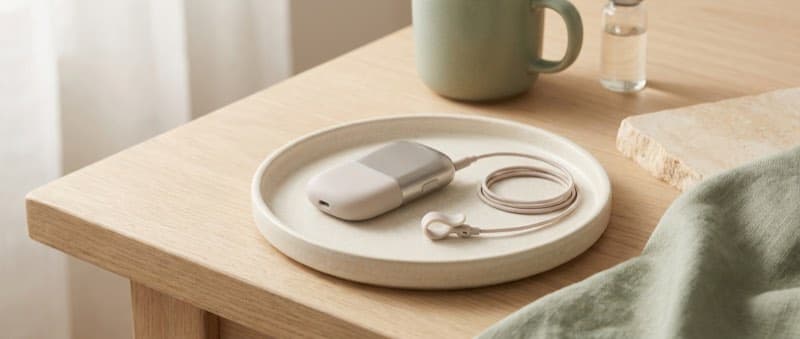
tVNS (Transcutaneous Vagus Nerve Stimulation)
Availability At home
What it is
A small electrical stimulator, clipped to the ear or pressed against the neck, that targets a branch of the vagus nerve through the skin. No implant or surgery involved, unlike the decades-old surgical vagus nerve stimulator used for epilepsy; this is the wearable, over-the-counter version.
Why people use it
The pitch runs through the nervous system: lower stress, better heart rate variability, calmer sleep, less inflammation, sold as a lever on the same pathway that weakens with age. People wear it daily as a stress-management habit more than a treatment for any diagnosed condition.
How it's delivered
A session runs about 15 minutes, once or twice a day, with the device clipped to the tragus or ear canal, or held against the neck near the carotid artery. No prescription, fitting, or clinic visit is required for the consumer versions.
Where the evidence stands
The best human data here comes from a university study in adults 55 and older: a single session raised measures of vagal tone and baroreflex sensitivity more than sham stimulation, and two weeks of daily use improved autonomic measures along with some quality-of-life, mood, and sleep scores, with the biggest gains in people who started with the most sympathetic-leaning nervous systems. That is real, controlled evidence for short-term autonomic change in older adults, not proof of slower aging, reduced disease risk, or a longer life, none of which any tVNS trial has tested.
Estimated cost
- $280–$450 for a consumer ear-clip or neck device
- Sessions typically 15 minutes, once or twice daily
- CE-marked in Europe as a Class IIa medical device; not FDA-cleared for any wellness claim
- No prescription required
Who offers it
- Consumer deviceNurosym
- Consumer devicePulsetto
- Consumer deviceXen (Neuvana)
Observed on the consumer market on our last research pass; each listing is stamped when verified. We may be compensated when you buy through links to these providers; payment never affects ranking.
Go deeper
No recovery-modalities guide covers tVNS yet. The science of aging hub is the closest read on where nervous-system interventions sit in the wider research picture.
Longevity.io is for educational purposes only and is not medical advice. Anyone with a heart rhythm condition or an implanted device should check with a clinician before trying vagus nerve stimulation. Confirm device specifications and return policy directly with any provider.
Build your starting plan.
A few short questions, about two minutes. The Blueprint recommends where to start and explains why.
Build my Blueprint