
Steam bathing
Steam rooms provide humid warmth for a quiet bathing break, with distinct heat and maintenance requirements.
Label covers Claimed lasting health benefits; direct steam-bathing evidence insufficient
Availability In clinic or at home
What it is
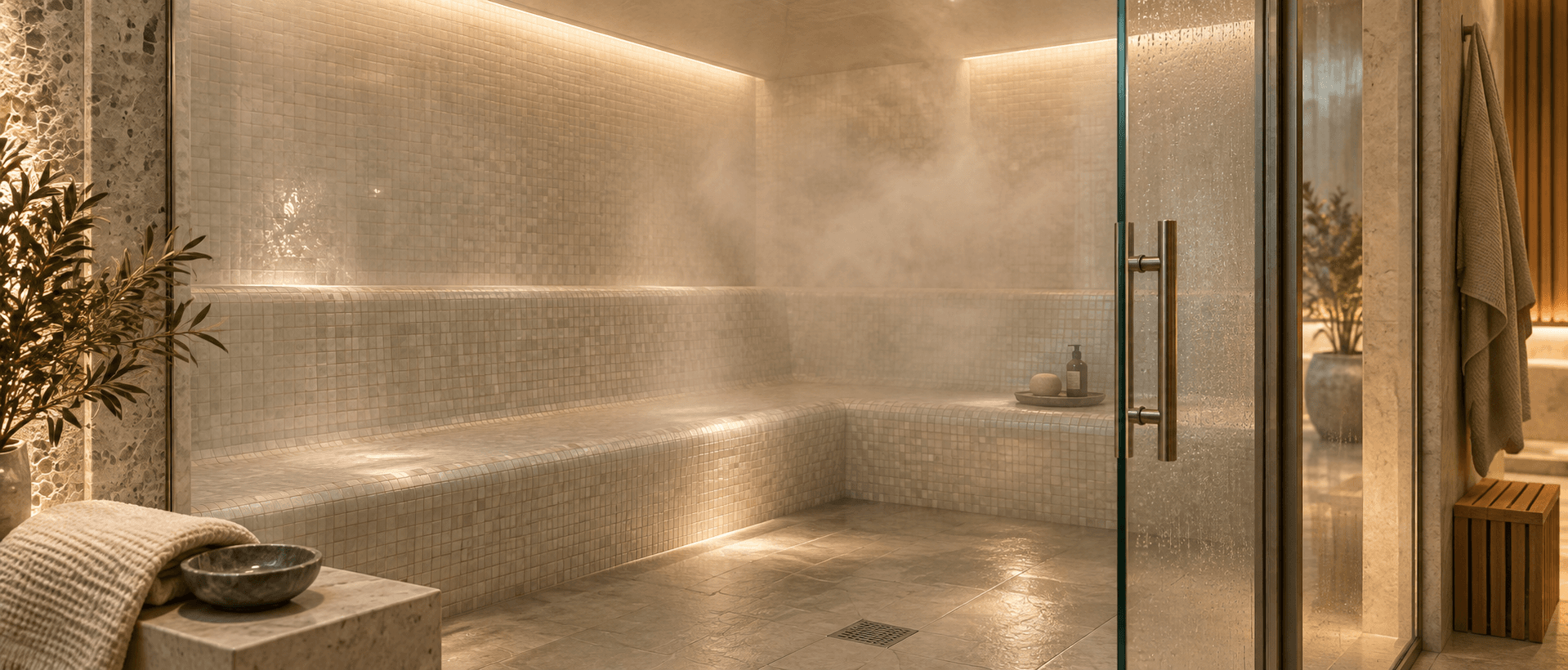
Steam bathing surrounds you with warm, humid air inside an enclosed room. A generator supplies the steam, while waterproof surfaces contain the moisture. The experience differs from the hotter, drier air of a traditional sauna.
Why people use it
People use steam rooms for warmth, relaxation and a pause in their day. These are wellspan interests, concerned with how daily life feels. The appeal is the warm environment and an uninterrupted break.
How it's delivered
You sit on a bench in a shared steam room or a private steam shower. Humidity limits sweat evaporation, so a lower room temperature can still create considerable heat strain. Ventilation, cleaning and temperature controls need ongoing attention. A home installation also needs a practical plan for drying surfaces and reaching equipment for maintenance, rather than simply adding a generator.1
Where the evidence stands
The Insufficient evidence label applies to claimed lasting health benefits. Direct steam-bathing research is limited; this does not demonstrate that steam bathing is ineffective. A small comparison found greater heat strain during steam bathing than dry sauna under the conditions tested.2 It measured immediate physiological responses, not disease prevention or longer life. Dry-sauna findings cannot automatically establish steam-room benefits: humidity changes the body's response to heat, and exposure conditions differ.
Build your starting plan.
A few short questions, about two minutes. The Blueprint recommends where to start and explains why.
Build my Blueprint