
Massage and bodywork
Manual massage, massage chairs and dry water-jet beds offer different experiences and carry different evidence.
Label covers Manual massage for chronic low-back pain and related function
Availability In clinic or at home
What it is
Massage applies pressure and movement to the body's soft tissues. A practitioner uses their hands, while a massage chair uses mechanical pressure. A dry hydromassage bed moves water jets beneath a barrier, keeping the person dry.
Why people use it
People seek relief from aching muscles, less tension and time to relax. These wellspan goals concern comfort and daily function. When pain limits movement, the treatment choice also needs to account for its cause and the person's wider care.
How it's delivered
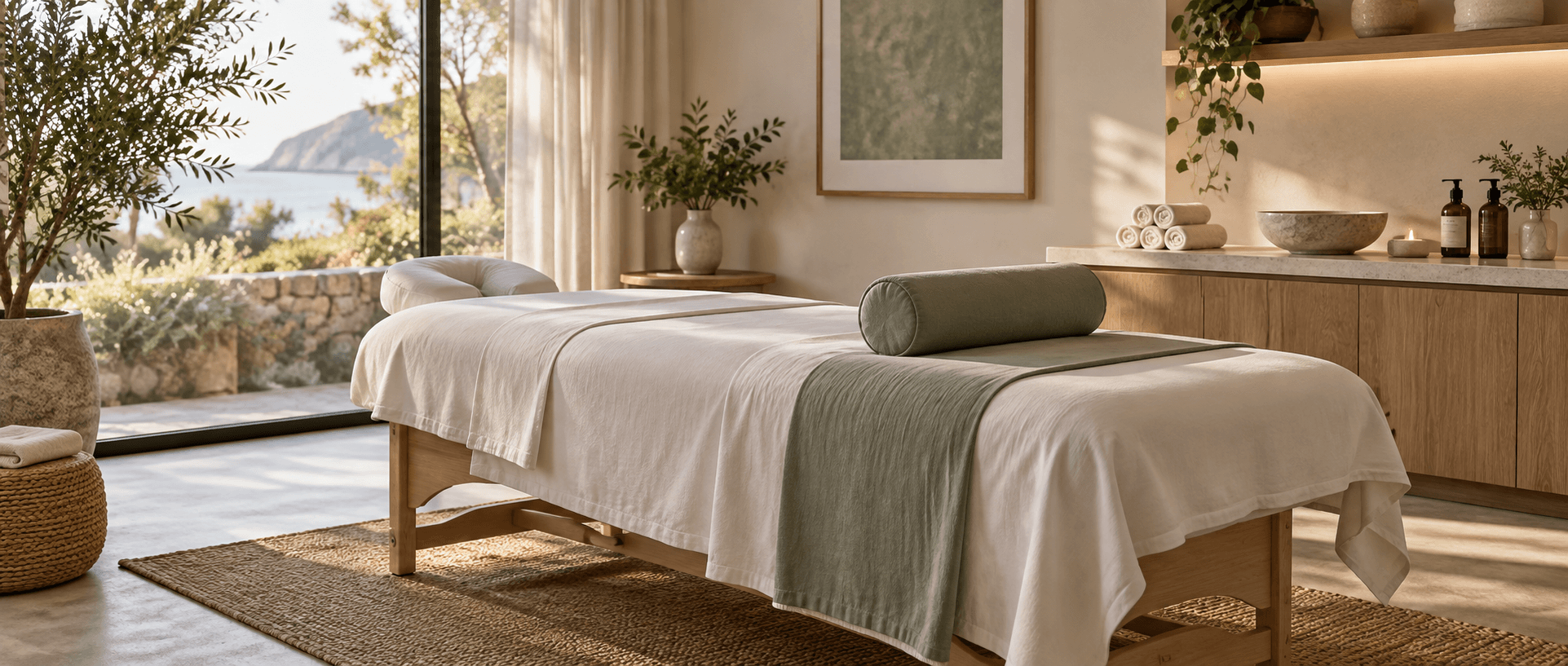
Manual massage takes place on a table or chair, with pressure adapted during the appointment. Mechanical systems follow adjustable programs. Your preferred pressure and comfortable positioning help guide the choice. A home therapy table supports visiting practitioners; the furniture itself doesn't provide treatment or determine the quality of care.
Where the evidence stands
Evidence for manual massage supporting chronic low-back pain and related function is Emerging, including a controlled trial.1 That finding doesn't validate every bodywork technique. Chair evidence is limited: one trial found physiotherapy helped pain and disability more.2 Dry water-jet beds need separate evidence. A machine shouldn't inherit the evidence grade of hands-on treatment or replace rehabilitation on that basis.
Build your starting plan.
A few short questions, about two minutes. The Blueprint recommends where to start and explains why.
Build my Blueprint