
Air purification
Source control, ventilation and filtration can reduce indoor exposures; the measured pollutant determines which intervention helps.
Label covers Measured particle reduction; not disease prevention
Availability At home
What it is
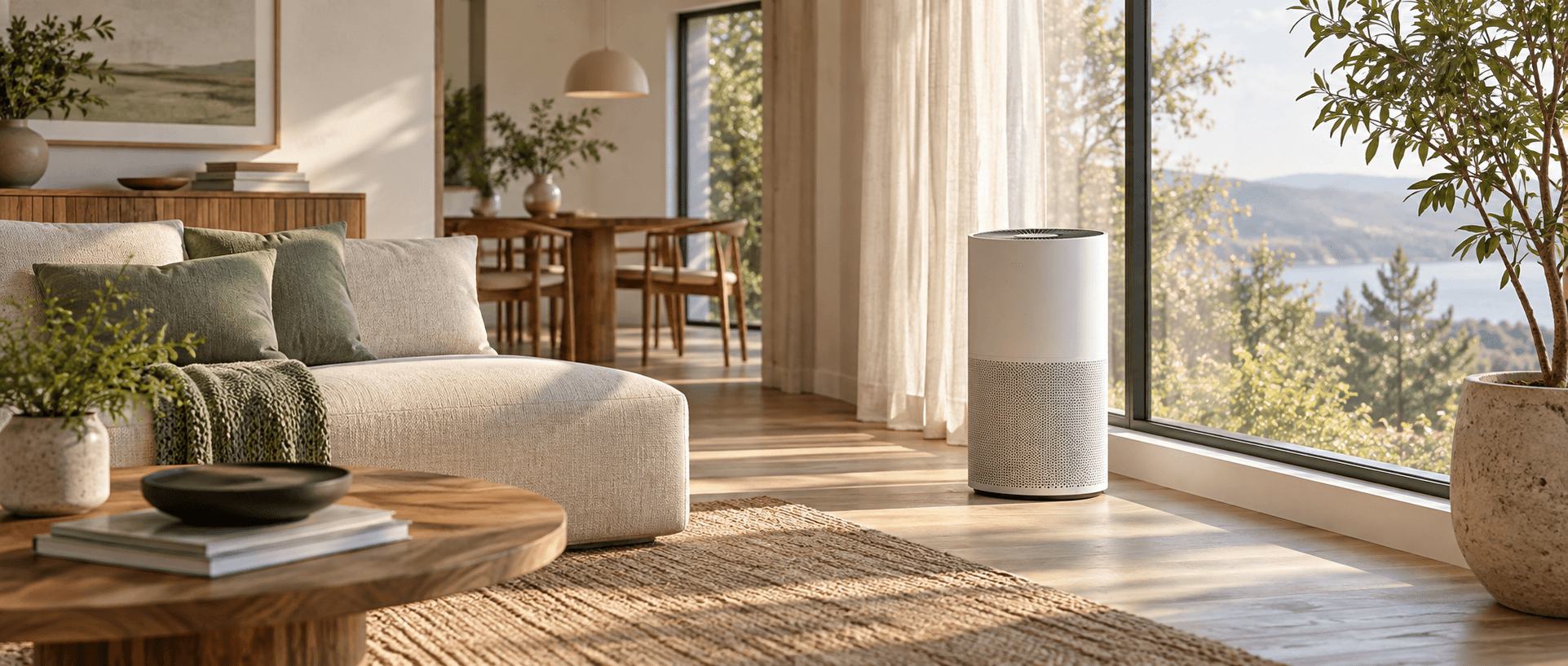
Air purification removes airborne pollutants through filtration or other air-cleaning methods. Source control and ventilation complement that work. Portable cleaners and building systems perform different parts of that work. An air-quality monitor measures conditions; it doesn't remove pollutants by itself.
Why people use it
People make these changes to reduce exposure to airborne particles and create a more comfortable room. Lower exposure is relevant to healthspan, but it is an environmental outcome rather than proof of fewer illnesses or longer life.
How it's delivered
A particle cleaner needs enough airflow for the room and regular filter maintenance. Ventilation addresses stale indoor air when outside air is suitable. Particle, carbon-dioxide and chemical sensors measure different things, so one reassuring reading doesn't describe the entire room. Filters also don't fix an ongoing damp or mould source. Effective room planning includes the work needed to address that source.
Where the evidence stands
The Established grade applies to particle reduction, supported by measured filtration performance and public-health guidance. Clinical effects have a different evidence base: a small randomized study found a short-term blood-pressure signal, but it didn't establish fewer cardiovascular events. A filter's ability to remove particles therefore shouldn't become a general disease-prevention claim. The study measured exposure and blood pressure separately.
Longevity.io is for educational purposes only and is not medical advice. We may be compensated when you contact providers through Longevity.io; payment never affects ranking. Air cleaners should not intentionally generate ozone in occupied spaces. The Environmental Protection Agency identifies ozone as a lung irritant; the device technology and maintenance instructions matter. Filtration does not replace attention to combustion hazards or moisture sources.
Build your starting plan.
A few short questions, about two minutes. The Blueprint recommends where to start and explains why.
Build my Blueprint