
Flotation therapy
Flotation combines buoyancy and quiet surroundings, with emerging evidence for short-term calm.
Label covers Short-term calm; superiority over quiet reclining unsettled
Availability In clinic or at home
What it is
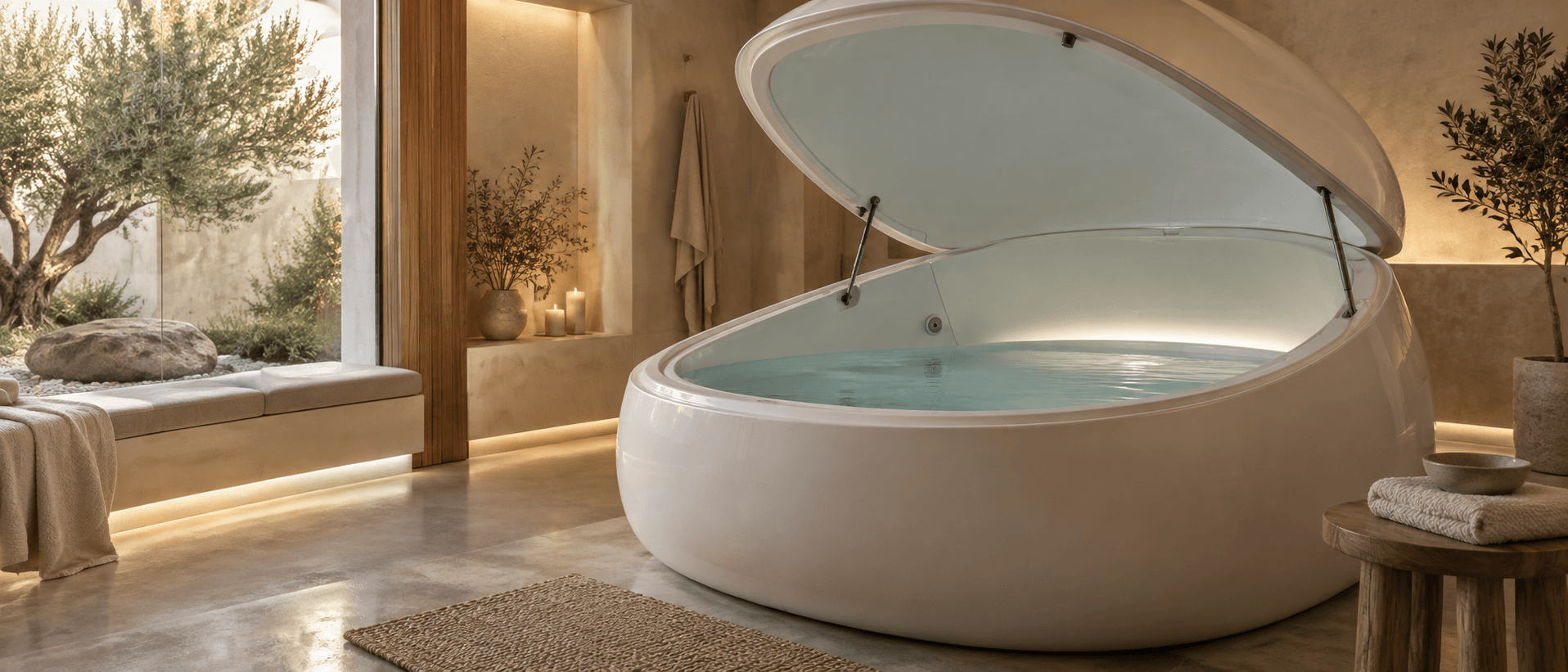
Flotation therapy involves lying in warm water containing enough dissolved magnesium sulfate to support your body. A quiet room, open pool or enclosed pod reduces outside stimulation. You float with your face above the water.1
Why people use it
People use floating to unwind and spend time away from noise and demands. The relevant wellspan goals are feeling calmer and less tense. The enclosed setting may appeal to some people, while others prefer an open pool.
How it's delivered
You shower before entering and settle into the water at your own pace. Before booking, you can check the enclosure, exit arrangements and assistance available. You can also ask how the operator handles cleaning between customers and any contamination of the water. High salt concentration doesn't remove the need for cleaning, disinfection and properly maintained equipment.1
Where the evidence stands
Evidence for short-term calm and anxiety relief is Emerging. In a randomized study, people with anxiety or depression reported improvement after floating, but quiet reclining also helped.2 The study couldn't establish that floating works better than the chair comparison. These findings support a possible short-term experience benefit, not a replacement for mental-health treatment or evidence of longer life.

Build your starting plan.
A few short questions, about two minutes. The Blueprint recommends where to start and explains why.
Build my Blueprint